
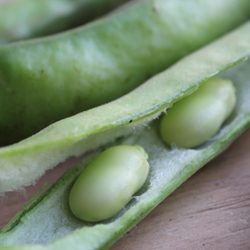
Shelling beans come in many different colors and sizes, but they all have some sort of bumpy seed pod that must be removed.
The work can be tedious but therapeutic, especially if done on the porch on a warm summer’s day. It’s also a great activity to do with your kids.
Besides, the taste makes it well worth the effort. Fresh shelling beans have a rich flavor and a melt-in-your-mouth texture that’s very different from the typical starchiness of dried beans.
Varieties
Common varieties include: fava beans, garbanzo beans, Lima beans, cranberry beans, Italian butter beans, Cannellini beans and English shelling beans.
Preparation
Run your finger down the back of the bean to split it open. Then, free the beans from the inner membrane and place them in a separate container; composting the outer shell. You can also twist the pod slightly to help pop the beans out. One pound of beans yields about two cups of shelled beans.
There’s no need to soak fresh shelling beans, but some recipes may instruct you to boil the pods whole, which sometimes make the shelling process go more smoothly.
Shelled beans can be added to soups or braised with fresh herbs as a side dish. Gently boiled beans can also be ground into a hummus or sprinkled over pasta.
Note: Never eat raw Lima beans. Some varieties have high levels of toxins which turn into a form of cyanide during digestion and can make you ill. Fortunately, cooking de-activates this easily.
Storage Tips
Fresh shelling beans are best eaten as quickly as possible. You can store whole pods in a paper bag or loosely wrapped plastic bag in the fridge, but it’s better to cover and chill shelled beans for up to three days.
Long Term Storage Tips
Shelled beans can be frozen for up to 6 months. If you’re going to do this, shell and freeze them as soon as you get them to help preserve their flavors.
Shelling beans can also be dried, but this is not usually an efficient or cost-effective process.
Nutrition
Shelling beans are a spectacular plant-based protein source. One cup of boiled fava beans, for instance, contains 13 grams of protein.
Shelling beans are also a good source of folate, which aids in cell division and is especially important for pregnant mothers.
Seasonality
July to September or October.
Recipes
Grilled Fava Beans
Heirloom Tomatoes with Shell Bean Hummus
Pasta E Fagioli With Sausage
Savory Shelling Beans and Greens
Shell Bean Soup