
The Forono beets in this week’s boxes may look more like a radish or a parsnip, but these special roots from Winter Moon Farm should be cherished like a fine wine.
A traditional Italian beet variety, Foronos have an extra earthy flavor and their cylindrical shape makes them extremely easy to peel and slice. Roast them with fresh organic rosemary from Happy Valley Organics, for a simple local dish with rich flavors.
Locavore Recipe of the Week
Nature’s Circle Farm has been growing some enormous organic spaghetti squash for us, and this week the Dogma Box customers will finally get to give them a try.
Though spaghetti squash is not as nutrient dense as some of our other winter squashes, it’s fun to eat and tastes great slathered in butter.
This recipe for Spaghetti Squash with Brown Butter and Parmesan shows just how simple it is to cook spaghetti squash. In fact, it’s not much more difficult than making a bowl of pasta!
This Week’s Local Produce
Fingerling Sweet Potatoes
Red Fire Farm
(Granby, MA)
Deadon Cabbage Celeriac
Kohlrabi
All of the fruits and vegetables we deliver are grown without synthetic pesticides and are USDA certified organic. Interested in receiving produce that’s both organic and locally sourced all year round? Check out our Local Dogma Box.
Similar to a CSA or farm share, our Local Dogma Box is filled with the best organic produce from local and regional farms and brought right to your door each week. It’s the easiest way to eat like a locavore!
2014 was an exciting year full of great milestones. We’re very happy with the growth we experienced while adhering to our mission to give back to the community and promote sustainable living.
Our Year in Review Infographic summarizes the incredible ways that our farmers, employees, customers and their families are all working together to build a more sustainable food system.
Download it now.
Winter is the season for sweet, juicy fruits and hardy root vegetables. The weather may be cold and bitter, but the Boston Organics Winter Produce Guide will help keep your kitchen warm and spirited throughout the long winter months.
Look for your own copy of the 2015 Winter Produce Guide with your next delivery. If you misplaced yours, you can order another one for free or click below to download the digital version.
Looking for more tricks to surviving the winter? Check out 5 Insider Tips for Winter Grocery Deliveries.
As we prepare for what the National Weather Service is calling “a crippling and potentially historic blizzard,” we want to assure you that we will deliver your weekly groceries as quickly as possible, but that safety is our primary concern.
We have been advised not to drive or make deliveries on Tuesday, which will affect the rest of the week’s delivery schedule. If you were scheduled to receive a delivery on Tuesday (1/27), you are now scheduled to receive a delivery on Wednesday (1/28). All subsequent deliveries have been pushed back a day:
| Normally Scheduled Delivery Day | Expected Post-Blizzard Delivery Day |
| Tuesday | Wednesday (1/28) |
| Wednesday | Thursday (1/29) |
| Thursday | Friday (1/30) |
| Friday | Saturday (1/31) |
Keep your eyes on your email inboxes and our Facebook and Twitter accounts for updates.
If you would like to cancel your delivery for this week, please let us know ASAP. Click here to fill out the cancellation form and email [email protected] with any questions.
Winter Pantry Staples
Whether you’re snowed in or simply tired of shoveling out your parking space, cooking and eating delicious food is the best cure for cabin fever. We can deliver all of your winter pantry staples directly to you, so you don’t have to worry about lacing those boots up again.
Equal Exchange Hot Cocoa Mix makes every day feel like a snow day. Made with rich organic cocoa and nonfat organic milk powder, just add hot water and you can enjoy creamy hot chocolate all day long. You can also restock your pantry with organic vegetable broth, fruit and nut bars and plenty of snacks.
We also have everything you need to cheer on the Patriots this Sunday against the Seahawks! Skip the lines and get Late July Organic Tortilla Chips, Appalachian Naturals Salsa and Neighborly Farms Chipotle Cheddar, all on sale this week.
If you feel like spending some time in your warm kitchen, we have a few great recipes to keep you busy. Try this one for Hot and Sour Cabbage Soup, which is fun to make with the special purple Deadon cabbage from Red Fire Farm.
And depending on whether you get Winter Moon Farm’s organic golden beets or their snowy white Hakurei turnips, you’ll want to check out these recipes for Roasted Turnips with Buttered Greens and Sweet and Smoky Beet Burgers.
Enjoy your produce and have a delicious week!

A crucial component of Thanksgiving feasts, sweet potatoes are often forgotten once the holiday seasons have passed. But sweet potatoes are some of the healthiest and most versatile vegetables available during the winter, so it should be no surprise that they’re making a comeback in New England winter cooking.
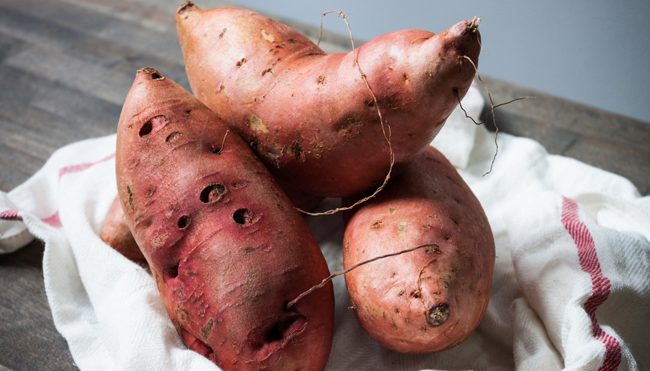
One baked sweet potato contains more than two times your recommended daily allowance of Vitamin A, a third of your recommended Vitamin C and only 140 calories. Sweet potatoes are also naturally fat free and cholesterol free; making them a healthier alternative to regular potatoes.
In fact, sweet potatoes, which thrive in hot, tropical climates, are only very distantly related to the traditional Irish potato. Columbus brought sweet potatoes back from the West Indies well before Europeans discovered Irish potato in the Andes Mountains.
Sweet potatoes are also entirely botanically different from yams, even though the names are (mistakenly) used interchangeably. While sweet potatoes are the edible roots of a morning glory flower, yams are technically a tuber like the Irish potato. Yams also have rough, scaly skin and contain significantly less Vitamin A than a sweet potato.
While American farmers grow 1.25 million tons of sweet potatoes each year, yams are rarely grown commercially in the United States and are almost never seen on grocery store shelves. North Carolina is responsible for well over one third of all sweet potato production in the US, but the farmers in our network of New England organic farms grow a sizable harvest every fall and winter.
If you were to eat a freshly harvested sweet potato, you might be surprised by its bland flavor. Sweet potatoes are generally cured in a hot, high humidity room for several days after harvest to increase their shelf life and prompt the sweet potatoes to release an enzyme which converts the roots’ starches into sugars.
This process is put into overdrive when you cook a sweet potato, heightening its flavor to the point of perfection. Sweet potatoes can be boiled, steamed, baked, roasted, microwaved and mashed. They can be used in side dishes, soups, entrees and even baby food.
The possibilities are endless, but here are 4 of our favorite ways to eat sweet potatoes. Click on the photos below to get the recipes:
 | |
| Sweet Potato Soufflé | Sweet Potatoes, Apples and Braising Greens |
| Sweet Potato Fries with Fried Sage | Jeff’s Famous Sweet Potato Quinoa Black Bean Burgers |
The ground may be icy and frozen, but the veggies it produces are as bright as the summer sky.
This week Michael Docter is bringing us organic golden beets from Winter Moon Farm in central Massachusetts. His neighbors at Red Fire Farm have some of the first sunchokes of the season and we’re putting them in all of the Dogma Boxes!
Locavore Recipe of the Week
The organic cabbage from Red Fire Farm this week is a special winter variety known as Deadon cabbage.
This cold-hardy leafy green is covered with dark purple leaves. While freezing temperatures kill more fragile greens, the cold weather actually sweetens the cabbage’s flavor and intensifies the purple coloring.
There are lots of great ways to use your Deadon cabbage, but we’ll be making some Hot and Sour Cabbage Soup to keep us warm.
Don’t forget to order some Field Day Organic Vegetable Broth and a block of Vermont Soy Organic Tofu to add some extra protein to this delicious vegetarian soup.
This Week’s Local Produce
Fingerling Sweet Potatoes
Porter Farm
(Elba, NY)
Onions
Winter Moon Farm
(Hadley, MA)
Golden Beets Carrots Parsnips Daikon Radishes
Turnips
All of the fruits and vegetables we deliver are grown without synthetic pesticides and are USDA certified organic. Interested in receiving produce that’s both organic and locally sourced all year round? Check out our Local Dogma Box.
Similar to a CSA or farm share, our Local Dogma Box is filled with the best organic produce from local and regional farms and brought right to your door each week. It’s the easiest way to eat like a locavore!
While everyone gears up for yet another week of cold weather and frigid evenings, your Boston Organics box is constantly changing, with new items from different organic farms each week.
Keep ‘Em Coming: New Add-ons
In addition to all of our delicious organic produce, we offer a wide array of grocery items that you can “add-on” to your weekly order. You can already get most of your grocery staples like organic milk, eggs, cheese, garlic, tofu, coffee and tea delivered to you with your weekly box. But our selection is constantly growing.
Our weekly newsletter includes announcements about new add-ons, but you can also visit the New Items page of our website. We take feedback from the Boston Organics Community very seriously, so if you have any suggestions of items you’d like us to carry, please send us an email.
We make it easy to always have healthy food in your kitchen. Order any add-on for just a single delivery or set up a subscription for groceries you know you need to buy each week.
This week we’re launching a whole heap of new add-ons including organic vegetable broth, a new line of organic breakfast cereals and some super addicting but totally healthy organic snacks! Visit our New Items page to learn more and give ‘em a try.
This Week’s Produce
Organic green beans, beets and oranges are just some of the fresh fruits and vegetables featured in this week’s produce boxes. Many members of the Boston Organics Community will receive locally-grown organic thyme in their boxes, a special winter treat from the solar powered greenhouses at Happy Valley Organics in Whatley, MA.
Sometimes the best way to take advantage of the farm-fresh produce in your box is to make something simple.
This week our newsletter features a recipe for Garlic and Thyme Green Beans. Of course this recipe can be made with garlic powder, dried thyme and frozen green beans, but the beauty of these simple recipes comes from the vibrant flavors found in fresh, organic ingredients.
Amateur cooks will also appreciate our recipe for Basic Sautéed Leafy Greens. There are few things worse than the numbing bitterness of overcooked leafy greens. Whether you’re cooking dandelion greens for the first time or testing out Olivia’s Organics Sauté Blend (another new add-on item!), this recipe will give you the skills to prepare leafy greens like a pro.
Citrus Update
It may still feel like a distant speck, but the end of winter is on the horizon. As we continue to get deeper into winter, the varieties of ripe organic citrus start to change.
This may be one of our final weeks for tangerines, but there are Minneolas in almost every box this week! A cross between a tangerine and a grapefruit, Minneolas are shaped like a red-orange bell with a distinctive bump protruding from its stem end. Juicy and sweet with a mild tartness, this citrus fruit is easy to peel and generally has very few seeds.
Meyer lemons continue to be available as add-ons and our growers say that the much adored Murcott mandarins and blood oranges are almost ready for harvest, so stay tuned.
Enjoy your produce and have a delicious week!
Doug Coldwell and Happy Valley Organic’s organic herb production has slowed slightly, but this week we have lots of fresh-cut organic thyme from his solar powered greenhouses in Whately, MA.
This fragrant herb has many medicinal and culinary uses, but it pairs particularly well with the colorful collection of hearty root vegetables that Red Fire Farm and Winter Moon Farm have been growing for us in central Massachusetts.
Locavore Recipe of the Week
This week’s recipe for Roasted Carrot, Parsnip and Potato Soup will warm your bones and fill your bellies. Most soup recipes tell you to boil the vegetables, which creates a richer broth, but ultimately weakens the vegetable’s flavors and lessens their nutritional value.
By roasting the veggies and blending them into the soup, you’ll discover a much richer flavor. It also helps to use a high-quality organic vegetable broth, now available as an add-on through our website!
This Week’s Local Produce
All of the fruits and vegetables we deliver are grown without synthetic pesticides and are USDA certified organic. Interested in receiving produce that’s both organic and locally sourced all year round? Check out our Local Dogma Box.
Similar to a CSA or farm share, our Local Dogma Box is filled with the best organic produce from local and regional farms and brought right to your door each week. It’s the easiest way to eat like a locavore!
Let’s face it: surviving winter in New England is no easy task. Fortunately, Boston Organics keeps your kitchen stocked with fresh, healthy food even if you don’t feel like going outside.
Some of you have been using Boston Organics for several years, but many of you are new to our service. Here are 5 insider tips that will help you make the most of your Boston Organics experience this winter.
1. Change Your Drop-Off Location
We want to make it as convenient as possible for you to eat healthy, which is why we bring farm-fresh organic produce directly to you!
For your safety and for the safety of our delivery drivers, please make sure that your delivery location is easily accessible from the street and that the pathway is shoveled and de-iced.
If your delivery location is not covered, please close your empty bins and store them upside down to keep them from filling up with snow and ice.
It’s easy to change your delivery location for the wintertime, just fill out this form.
2. Leave Out a Cooler
This insider tip is an obvious solution for keeping your food fresh in the summer heat, but leaving an insulated cooler at your drop off location can go a long way in keeping your delicate veggies (read: lettuce) from freezing.
As an added bonus, our drivers will take the empty bin back with them so you don’t have to worry about remembering to leave your empty bins out each week!
If you want to start leaving out a cooler, we kindly ask that you let us know in an email and clearly label the cooler for Boston Organics Deliveries.
Click here to print out a label.
3. Send In a Key
Want to know the key to keeping your groceries safe and fresh while they wait for you to come home?
We are bonded and insured to accept keys from our customers, so we can leave your groceries in a secure, temperature-controlled foyer or lobby.
It only takes 2 steps to make this happen: Update your delivery instructions and send in your key.
4. Know When Your Delivery Is Coming
We schedule all residential deliveries between 10am and 5pm and our fleet manager custom designs each day’s delivery routes to maximize efficiency and limit our fossil-fuel consumption.
While we’re not able to guarantee a specific delivery window, we’re happy to contact your driver to check on the status of your delivery. In most cases, we can then give you an estimated arrival time.
Send us an email or give us a call the morning of your delivery to find out whether your delivery will be made early in the morning or later in the afternoon.
Our friendly customer service team is here to help!
(Please keep in mind that our delivery routes change from week to week, so your approximate delivery time may vary without notice.)
5. Check Your Inbox and Our Social Media Pages
Our dedicated and experienced drivers make deliveries in the summer heat and the dead of winter. We’ll bring your groceries through wind, rain, snow and ice.
But sometimes the weather conditions make it unsafe to be on the road. On these rare occasions, we’ll send updated delivery information to you by email and in posts via our social media pages.
Keep your eyes on your inbox and on our Facebook, Twitter and Instagram pages. Our weekly newsletter and regular social media posts keep you up to date on the latest news from Boston Organics and gives you great recipe ideas all winter long!
Blueberries are blue, sweet potatoes are sweet (though not actually potatoes), but eggplants miserably fail to live up to the expectations that their name creates. Though you can make a delicious eggplant omelet, you will still require a hen’s contribution.
This leads us to ask: how did the eggplant get its name?
The answer, according to horticulturalists from Purdue University, becomes abundantly clear once you realize that there are, in fact, dozens of different kinds of eggplants out there.
Eggplants are indigenous to India and parts of southeast Asia where they have been grown for thousands of years. They migrated along trade routes through Persia and north Africa into Medieval Spain and Italy, but its use was mostly limited to herbal remedies due to its tendency to cause indigestion when not cooked thoroughly.
But eggplants gained widespread popularity in the English speaking world during the British occupation of India. At the time, the most popular variety of eggplant in India produced white egg-shaped fruits.
Photo credit: twistedstringknits (Flickr)
This leads to another interesting fact about eggplants. Though they’re commonly cooked and eaten like a vegetable, botanically speaking, eggplants are fruits. This is similarly the case with tomatoes and peppers, which are related to the eggplant as members of the nightshade family.
Eggplants come in various shapes and sizes. The classic variety has a deep purple “eggplant” colored skin and an ovular shape. We’ll sometimes also bring you Sicilian eggplants with streaked white and purple skin.
Recently, a few of our local farmers have been growing Asian eggplant varieties with long skinny bodies. These tend to be easier to cook with because of their lower seed count and thinner skin (you usually don’t have to peel it). The flesh also more readily soaks up sauces and flavors.
Eggplants are extremely versatile and can be used in stir-fries, baked into a vegetarian lasagna, or mashed into a smoky babaganoush. The possibilities are limited only by your imagination. Here are a few ideas to get you started: