
Trees of Knowledge
Nobody knows more about growing organic apples than Read Miller. Read was raised in the fields of his ancestors, between the apple trees of Dwight Miller and Son Orchards. He’s the latest in a long line of Millers that have been farming in Dummerston since before Vermont was a state.
The Millers were always prudent in their use of chemical inputs, but when Read went to China in the mid-1990s to consult on agricultural practices, he admired how rural fruit farmers managed their crops with traditional, pre-industrial practices. When Read returned, he decided to transition the farm’s nearly 100 acres of apple orchards into certified organic production.
Read has run thousands of experiments on his family’s apple orchard in the 19 years since the land became certified organic, helping the Millers create an unparalleled strategy for growing apples in the northeast without synthetic herbicides and pesticides.
“We have to be very proactive in terms of how we address potential problems,” Read said, “It’s not just about what we do, but how we do it.”
Every year, Read combats coddling moths and apple maggots, and he must recognize precisely the right time to begin his annual offensive against apple scab (just as it starts to germinate). But perhaps most importantly, Read knows exactly what needs to be done to maintain his orchard’s fertile soil and how to grow a dazzling array of crisp, flavorful apples.
Organic Apple Growing Is Far From Peachy
Farming — particularly organic farming — is an inherently risky venture. It requires a large upfront investment at the beginning of every season, bankrolled on the hope that a generous harvest and fair market prices will meet you at the other end. His family has worked the same land for eight generations, but Read soberly explained that he’s had to put the whole farm on the line almost every year.
The mercurial New England weather and a changing climate do not make things any easier. Over the last few years, harsh freezes and rising moisture levels have set and reset historic records, leading to rampant outbreaks of botanic diseases and difficulty pollinating crops.
All of these setbacks contribute to higher costs that are reluctantly reflected in higher prices. Still, Read dreams of a day when he can grow organic fruit at a price that every family can afford.
Exploring New Avenues
A few years ago, with the orchard in economic jeopardy, the Millers started creating their own value-added products. They began creating their own maple syrup and apple cider vinegar, which we now proudly sell as add-ons.
“Without the cider mill, we would quit right now,” Read explained. Some years, only 20% of his crop meets his high standards to sell as an eating apple. Meanwhile, the less aesthetically pleasing fruit can still be used to make delicious vinegar.
Another way that Read mitigates the challenges of organic farming is through diversification. In addition to the more than a dozen apple varieties that they’ve grown for generations, Dwight Miller and Son Orchards also grows peaches, pears, blueberries, strawberries, and leafy greens.
Supporting Local Farmers
Working with a food hub like Boston Organics is another way that farmers like Read Miller address the uncertainty inherent in organic farming. As Read prunes his trees in the spring, he knows that we’ll be there to purchase his apples after the harvest in the fall.
Read knows that our customers are smart, conscientious eaters who appreciate the effort and energy that goes into growing delicious, local, organic fruit. “Boston Organics has been very good for us,” Read said, “We seem to understand each other.”
Our Local Dogma Box includes organic fruits and vegetables sourced as close to Boston as possible throughout the year. Similar to a CSA or farm share, this box is filled with the best organic produce from local and regional farms and brought right to your door each week.
Even as our organic farm partners face colder weather and heavy rains, they continue to harvest beautiful fruits and vegetables for the Boston Organics Community!
You can celebrate the last few days of New England sunshine with a spicy arugula and watermelon salad or settle in with a warm bowl of potato leek soup as the rain starts to fall.
No matter the weather, this week’s Dogma Box has all of the best local organic ingredients for a memorable fall meal.
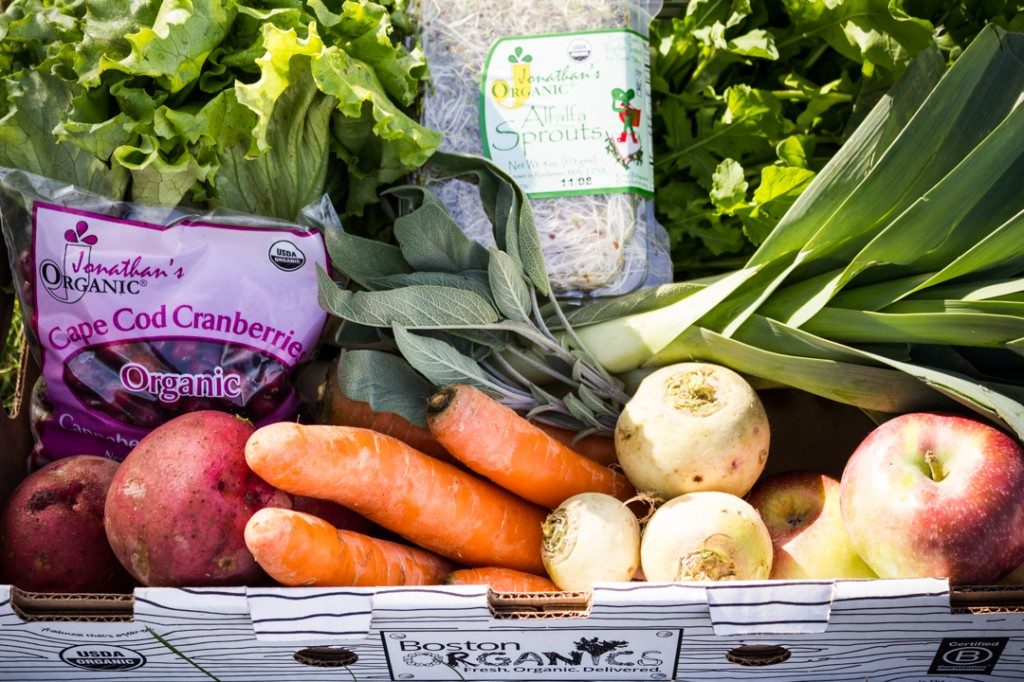
This week’s Dogma Box contains:
(Click links for storage tips and recipe ideas)
- Arugula – Atlas Farm (S. Deerfield, MA)
- Carrots – Atlas Farm (S. Deerfield, MA)
- Lettuce – Atlas Farm (S. Deerfield, MA)
- Potatoes – Atlas Farm (S. Deerfield, MA)
- Watermelon Radishes – Atlas Farm (S. Deerfield, MA)
- Sage – Happy Valley Organics (Whately, MA)
- Alfalfa Sprouts – Jonathan’s Sprouts (Rochester, MA)
- Cranberries – Jonathan’s Sprouts (Rochester, MA)
- Leeks – Porter Farms (Elba, NY)
- McIntosh Apples – Dwight Miller Orchards (E. Dummerston, VT)
Fresh sage adds a wonderful depth of flavor to stews, soups and roasts. The sage from Happy Valley Organics goes especially well with the leeks from Atlas Farm in this recipe for Simple Leek and Sage Risotto.
This week, we’re continuing to celebrate Fair Trade Month and Non-GMO Month and looking forward to Halloween!
While the plump orange squash in some of this week’s boxes may look like a traditional pumpkin, it’s actually an organic red kuri squash. The flesh of the red kuri squash has a rich, chestnut-like flavor. This week’s newsletter includes background on this exciting new squash as well as a recipe from world renowned sustainable chef, Alice Waters.
Our newsletter also features information about the young ginger coming in from Old Friends Farm – just about the only organic ginger grower in all of New England. Learn what makes young ginger special and get the latest news from our organic farm partners.

Over the summer, we held a friendly competition for members of the Boston Organics Community with 8 fabulous prizes from some of our favorite local companies. Last weekend, one of our lucky winners redeemed her prize: a personal cooking experience with Chef Ryan Redmond.
Chef Ryan is an excellent cook, a fantastic teacher, and an all-around great guy. He holds a Professional Chef’s Degree from the Cambridge School of Culinary Arts and has taught cooking to children and adults for many years. With his own company, Field to Fork, Chef Ryan combines his passion for good food and learning into personalized interactive dinner parties.
Chef Ryan worked with Becky, winner of the June Summer Rewards Prize Drawing and a veteran member of the Boston Organics Community, to create an amazing menu using fresh seasonal produce from Boston Organics.
The gourmet six-course menu included many new and creative dishes, but it was designed in a way so Becky could recreate all of them in her own kitchen after the party was over.
On Sunday afternoon, Becky invited a group of friends over to her house to cook with Chef Ryan. Together, they roasted potatoes with an avocado and pumpkin seed sauce, fashioned corn tortilla tacos with braised pork shoulder, pickled radishes and a black bean puree, and created exotic popsicles with pineapple, chile, coconut and Taza chocolate!
Through all the food, wine, chatter and laughter, Chef Ryan Redmond shared some of his distinguished cooking techniques with Becky and her guests. By the end of the evening, their minds were as full as their bellies — inspired by the hands-on experience of communal cooking.
To learn more about Chef Ryan Redmond and his company, Field to Fork, visit www.chefryan.org. If you’re interested in hosting your own interactive dinner party, shoot him an email and let him know you’re a member of the Boston Organics Community!
Our Local Dogma Box includes organic fruits and vegetables sourced as close to Boston as possible throughout the year. Similar to a CSA or farm share, this box is filled with the best organic produce from local and regional farms and brought right to your door each week.
This week’s Dogma Box is a genuine fall feast! Gideon and his crew at Atlas Farm have been working hard to prepare for the cool weather and it has paid off.
He’s bringing us a variety of peppers, leafy greens and root veggies to enjoy with the fabulous fresh thyme from Happy Valley Organics and the lovely McIntosh apples from Dwight Miller Orchards.
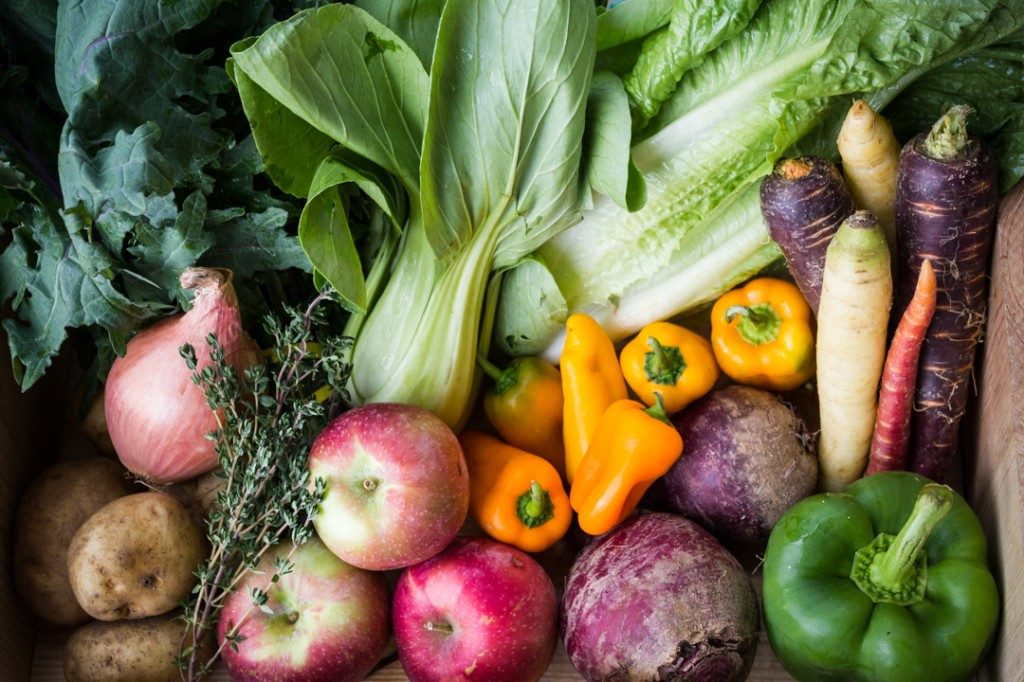
This week’s Dogma Box contains:
- Beets – Atlas Farm (S. Deerfield, MA)
- Green Bell Peppers – Atlas Farm (S. Deerfield, MA)
- Snacking Bell Peppers – Atlas Farm (S. Deerfield, MA)
- Bok Choy – Atlas Farm (S. Deerfield, MA)
- Carrots – Atlas Farm (S. Deerfield, MA)
- Kale – Atlas Farm (S. Deerfield, MA)
- Lettuce – Atlas Farm (S. Deerfield, MA)
- Potatoes – Atlas Farm (S. Deerfield, MA)
- Thyme – Happy Valley Organics (Whately, MA)
- Onions – Deep Root Organic Coop (Johnson, VT)
- McIntosh Apples – Dwight Miller Orchards (E. Dummerston, VT)
With the first frost coming to western Massachusetts last weekend, this may be the last harvest of bell peppers! Commemorate the end of summer weather with these Sweet Pepper Poppers.
Last night, our organic farm partners in western Massachusetts experienced their first frost of the season!
Fortunately, Gideon and his crew at Atlas Farm harvested a few loads of bell peppers before the temperatures dropped, so the Boston Organics Community will be able to enjoy one more week of his sweet and spicy peppers.
Meanwhile, our friends at Nature’s Circle Farm in New Limmerick, ME have been tending to a nice crop of organic buttercup squash and they’re bringing us some of their harvest this week.
Buttercup squash is a portly winter squash with a dark green inedible rind, silvery gray lines and a pale green bump on its blossom end. The deep-orange flesh has a nutty and creamy flavor not unlike a baked sweet potato.
You can saute, roast or steam buttercup squash as you would with any other winter squash, and we have a Simple Buttercup Squash Soup recipe featured this week on our website.
Our new organic tomato puree from Appalachian Naturals will help you savor the fantastic flavors of local tomatoes all year round. Made with organic tomatoes from local farms — including two of our farm partners, Atlas Farm and Red Fire Farm — this tomato puree is a great base for soups, sauces and stews. Go ahead. Give it a try.
Read this week’s full newsletter to learn about the bright side of colder weather! You’ll find a sweet bell pepper recipe, updates from our local farmers, and info about the more unusual items you might find in your box this week.
Our Local Dogma Box includes organic fruits and vegetables sourced as close to Boston as possible throughout the year. Similar to a CSA or farm share, this box is filled with the best organic produce from local and regional farms and brought right to your door each week.
There is so much amazing organic produce in this week’s Local Dogma Box that it’s hard to know where to begin. Atlas Farm has an incredible fall harvest of leafy greens and root veggies, and the fresh basil from Happy Valley Organics is out of this world.
But the real showstoppers are the local organic cranberries from Jonathan’s Sprouts (formerly Joanthan’s Organic). Harvested from a network of small organic bogs on Cape Cod, these are the freshest cranberries you can find.
This week’s Dogma Box contains:
- Arugula – Atlas Farm (S. Deerfield, MA)
- Beets – Atlas Farm (S. Deerfield, MA)
- Bell Peppers – Atlas Farm (S. Deerfield, MA)
- Carrots – Atlas Farm (S. Deerfield, MA)
- Chard – Atlas Farm (S. Deerfield, MA)
- Kohlrabi – Atlas Farm (S. Deerfield, MA)
- Lettuce – Atlas Farm (S. Deerfield, MA)
- Turnips – Atlas Farm (S. Deerfield, MA)
- Basil – Happy Valley Organics (Whately, MA)
- Onions – Porter Farm (Elba, NY)
- Cranberries – Jonathan’s Sprouts (Rochester, MA)
Not familiar with that strange bulbous root in your box? That’s probably kohlrabi, a descendant of wild cabbage and a very versatile vegetable. Here are 5 ways to cook kohlrabi, plus a special recipe for this week’s Dogma Box customers: Stir-Fried Rice Noodles with Kohlrabi and Basil.
October is both Non-GMO Month and Fair Trade Month — a reminder for us to pause our busy lives for one moment and to reflect on the current state of our food system. With the school year in full swing and the holiday season quickly approaching, this is a good opportunity to think critically and learn more about the food we eat and where it comes from!
You have a right to know what’s in your food. That’s the fundamental concept behind Non-GMO Month, which Boston Organics is celebrating throughout October.
As a Boston Organics customer, you’re already several steps ahead of most grocery shoppers because everything you get from us is USDA certified organic and therefore made without genetically modified organisms.
But with GMOs present in almost 80% of conventional processed food, shoppers across North America are coordinating their actions this month and calling for better management and regulation of genetically modified organisms.
What ARE GMOs?!
Credit: IAEA Imagebank, via Flickr
There is a lot of misinformation out there about GMOs, so let’s take a moment to make sure we’re all on the same page.
Genetically modified organisms (commonly abbreviated as GMOs) are plants or animals created through the process of genetic engineering. This experimental technology involves copying DNA from one species and inserting genetic material into a new organism, commonly using a bacterium or virus.
Though a fair amount of money and time has gone into researching GMOs with potential environmental or consumer benefits, the only GMOs in widespread commercial production are those that benefit commodity growers and large agribusinesses.
More than 75% of commercially grown GMO crops are engineered for herbicide resistance — specifically the herbicide glyphosate, which is patented by Monsanto and sold under the brand name Roundup. Almost all the rest have been modified to create a toxin known as Bt, which is used as a “natural” insecticide.
A Risky Technology
A combination of lenient regulation and strict patent protection has led to the rapid expansion of GMOs in our food supply without adequate prior testing.
Credit: Boston Organics
Relatively little research has been done on the long term effects of GMO production and consumption. Almost all of the research that has been done was conducted behind closed doors and was paid for by the corporations that stand to profit from the growth of the GMO industry and its associated chemical pesticides.
On a personal level, the long term effect on reproductive health remains unknown and there’s a chance that untested GMOs could lead to unexpected allergic reactions.
Environmentally, the irresponsible use of GMOs has already led to the creation of herbicide resistant “superweeds” and pesticide resistant “superbugs.” Meanwhile, genetically modified seeds encourage farmers to plant large acreage of monoculture, resulting in the systematic destruction of biodiversity, which ultimately makes our food supply even more vulnerable.
Credit: Kevin Wood, via Flickr
But perhaps the biggest risk that we take by remaining ignorant of this technology is its impact on our society.
Farmers are lured into restrictive contracts that fundamentally change the way they manage their land. Even farmers who deliberately refuse to buy genetically modified seeds must take extra precautions to avoid contamination from neighboring fields.
And the average American consumer, unable to see or taste these GMOs, is ignorantly ingesting GMOs by the forkful. At this time, over 60 countries require labels on food that contains GMOs, but the United States is not one of them. We should have the right to know what’s in our food.
What Now?
Learn
You now know the basics about GMOs, but it’s a complicated technology and our food system is endlessly complex. There is always more to learn.
The Non-GMO Project is a fantastic resource to get the facts on GMOs. As the only independent certifier of non-GMO food in North America, they help consumers make informed choices every day. Their GMO Fact Sheet is an excellent place to start learning more.
The Center for Food Safety is a well respected resource for quality information on food-related topics including GMOs. They recently debunked popular myths about GMOs that are commonly portrayed in the media.
The Cornucopia Institute pursues in depth analyses of various aspects of the food industry, but their findings are easily accessible through short articles and infographics.
Credit: MA Right to Know
Act
The FDA refuses to get involved in regulating GMOs and the US Congress is dragging its feet on a national GMO labeling bill.
Fortunately, individual states have begun working on their own legislation to reign in the widespread use of GMOs. This year alone, 35 new GMO labeling bills have been introduced in 20 states. Voters in Colorado and Oregon will have a vote on a GMO labeling measure this November.
See what’s happening with GMO legislation in Massachusetts and get involved.
Credit: Boston Organics
Eat
Supporting companies that have rejected GMOs by choosing non-GMO products is one of the best ways to show your support for a natural, GMO-free world.
Checking for the USDA Organic label is our favorite way to ensure that the food we eat is non-GMO and pesticide free. But when organic is not available, you can also look for the Non-GMO Verified seal.
Both labels are backed by third-party certification systems and they’re both great tools to help you and your family make informed choices. Everything that you can buy from Boston Organics is certified organic, and some of our products also have the Non-GMO Verified seal.
You can learn more about the differences and similarities between the two labels in our previous blog post.
Credit: Boston Organics
Let us know what YOU are doing to celebrate Non-GMO month! Post on Facebook, Twitter or Instagram and tag @BostonOrganics.
It’s been a busy week here at Boston Organics. In addition to the normal hustle and bustle surrounding the seasonal produce from our network of organic farms, we’ve also been busy with a number of exciting events!
Last week, the Greater Boston Chamber of Commerce recognized Boston Organics as one of the top 10 small businesses in the Boston area! We also attended the annual B Corp retreat and we’re preparing for the 19th Annual Boston Vegetarian Food Festival, which Boston Organics will be co-sponsoring once again.
As if we didn’t have enough to celebrate already, the whole month of October also happens to be both Fair Trade Month and Non-GMO Month.
Meanwhile, a steady stream of fresh produce continues to flow directly into your boxes from our network of organic farms. Atlas Farm has a full harvest of bell peppers, chard, collards, lettuce, and both red and green cabbage!
Read this week’s newsletter to see what’s fresh and in season this week. You’ll also find some great cabbage recipes and more details on our upcoming food-related events.
Fall is a time of great abundance and the traditional harvest season in New England. Fruits and veggies that sprouted under the summer sun reach their peak ripeness as the weather cools off.
Whether it’s Halloween treats, Thanksgiving feasts, or a Columbus Day apple picking adventure, autumn is associated with family holidays and really good food.
The 2014 Fall Produce Guide
Our series of seasonal produce guides give you special storage and cooking tips so you know exactly what to do with the produce in your box. You’ll also meet the amazing people who grow your food and find a few of our favorite fall recipes!
Look out for your own 2014 Fall Produce Guide with your next delivery. If you misplaced yours, you can order another one here or click below to view the digital version.
Your favorite seasonal produce add-ons are available for a limited time. If you want extra apples, kiwi berries, cranberries, or Brussels sprouts – make sure you order them now!